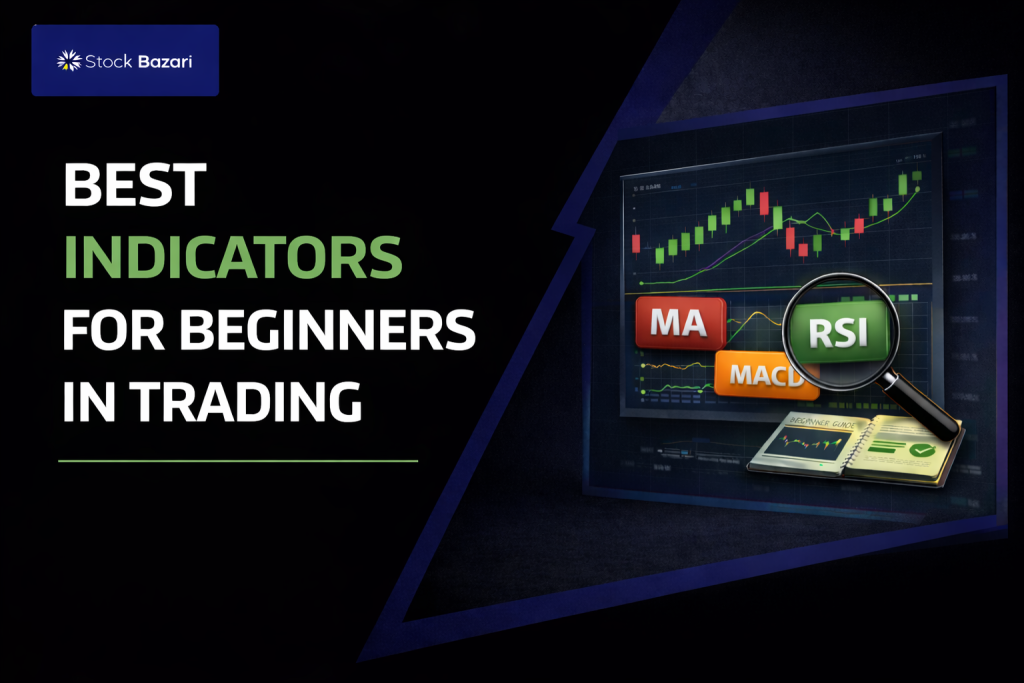
Best Indicators for Trading
Technical indicators are essential tools for traders in the stock market. They help you understand trends, momentum, and possible entry and exit points.
But many beginners make a mistake — they use too many indicators and get confused. The key is to use a few reliable indicators correctly.
What are Trading Indicators?
Indicators are mathematical calculations based on price, volume, or open interest. They help traders analyze market behavior.
Instead of guessing, indicators provide data-driven insights.
Why Indicators are Important in Trading
Indicators help traders:
- Identify trend direction
- Find entry and exit points
- Confirm trade setups
- Reduce emotional decisions
In fast-moving markets like Nifty and Bank Nifty, indicators can improve accuracy.
Top Indicators for Traders
1. Moving Averages
Moving averages are the most basic and powerful indicators.
Types:
- 20 EMA (short-term)
- 50 EMA (medium-term)
How to use:
- Buy when the price is above the moving average
- Sell when the price is below
Best for: Trend identification
2. RSI (Relative Strength Index)
RSI measures momentum and overbought/oversold conditions.
Levels:
- Above 70 → Overbought
- Below 30 → Oversold
How to use:
- Buy near oversold
- Sell near overbought
Best for: Reversal trades
3. MACD Indicator
MACD shows trend and momentum together.
How it works:
- Buy when the MACD line crosses above the signal line
- Sell when it crosses below
Best for: Confirming trends
4. VWAP Indicator
VWAP is widely used in intraday trading.
How to use:
- Buy above VWAP
- Sell below VWAP
Best for: Intraday traders in Nifty & Bank Nifty
5. Bollinger Bands
Bollinger Bands show volatility.
How to use:
- Price near upper band → Overbought
- Price near lower band → Oversold
Best for: Range-bound markets
How to Use Indicators Effectively
- Do not use too many indicators
- Combine 2–3 indicators only
- Use indicators with price action
- Always confirm signals before entering a trade
Example combo:
Moving Average + RSI
Conclusion
Indicators are powerful tools, but they are not magic. They work best when combined with discipline and proper risk management.
Start with simple indicators like moving averages and RSI. As you gain experience, you can explore advanced tools.
Consistency matters more than complexity.