Risk Management in Trading for Beginners
Most traders focus only on profits, but the real secret to success in the stock market is risk management. Even the best strategy will fail if you don’t protect your capital.
Whether you trade stocks, Nifty, or Bank Nifty, managing risk is what keeps you in the game long-term.
What is Risk Management in Trading?
Risk management means controlling how much money you can lose in a trade.
Instead of thinking “How much can I earn?”, smart traders think:
“How much can I afford to lose?”
This mindset separates beginners from professionals.
Why Risk Management is Important
Without risk management:
- One bad trade can wipe out your account
- Emotional trading increases
- Consistency becomes impossible
With proper risk management:
- You protect your capital
- You survive losing streaks
- You grow steadily over time
Key Risk Management Techniques
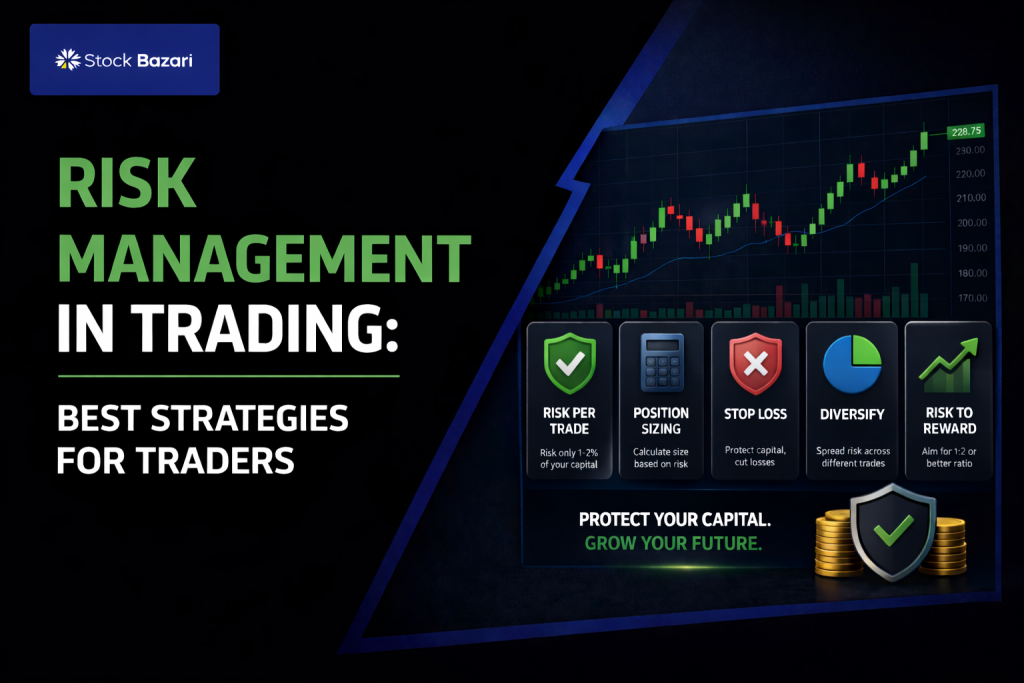
1. Stop-Loss Strategy
A stop-loss automatically exits your trade when the price moves against you.
Example:
If you buy Nifty at 22,000, you can place a stop-loss at 21,950.
Benefit: Limits losses
Rule: Always place a stop-loss before entering a trade
2. Position Sizing
Position sizing means deciding how much quantity to trade.
Rule:
Risk only 1–2% of your capital per trade
Example:
If you have ₹1,00,000, risk only ₹1,000–₹2,000 per trade
3. Risk-Reward Ratio
Always aim for a better reward than risk.
Ideal ratio: 1:2 or higher
Example:
Risk ₹1,000 → Target ₹2,000
This ensures profitability even with 50% win rate.
4. Diversification
Avoid putting all your money in one trade or stock.
- Spread your capital across different trades
- Avoid overexposure in one sector
Common Mistakes Traders Make
- Not using stop-loss
- Overtrading
- Risking too much capital in one trade
- Revenge trading after a loss
- Ignoring position sizing
These mistakes can quickly lead to losses.
Conclusion
Risk management is not optional — it is essential. It is the foundation of successful trading in India.
Even if your strategy is average, strong risk management can make you profitable. Focus on protecting your capital first, and profits will follow.
Remember:
“First survive, then thrive.”