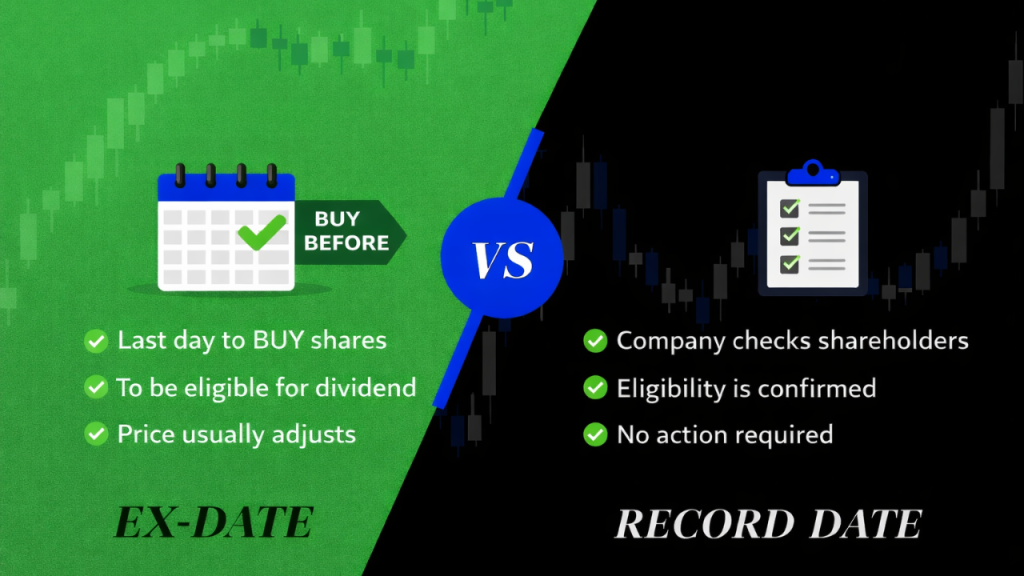
Ex-Date vs Record Date Explained
If you invest in stocks for dividends or corporate actions, you must understand two important dates — ex-date and record date.
Many investors get confused between these two, but knowing the difference can help you avoid missing benefits.
Let’s break it down simply.
What is a Record Date?
The record date is the date on which a company checks its records to identify eligible shareholders.
If your name appears in the company’s records on this date, you are eligible for benefits like:
- Dividends
- Bonus shares
- Rights issue
However, just buying shares on the record date does not make you eligible.
What is an Ex-Date?
Ex-date (or ex-dividend date) is the most important date for investors.
To receive benefits, you must buy shares before the ex-date.
If you buy shares on or after the ex-date, you will not be eligible.
This happens because of settlement timelines in the market.
Ex-Date vs Record Date: Key Differences
Let’s understand the difference clearly.
Timing Difference
- Ex-date comes before the record date
- The record date is when eligibility is confirmed
Example:
- Ex-date: 10th June
- Record date: 11th June
You must buy shares before 10th June.
Eligibility Criteria
- Ex-date determines whether you are eligible
- Record date confirms eligibility
So, ex-date is the key date for investors.
Price Impact
On ex-date:
- Share price usually drops by the dividend amount
This is because the benefit is no longer attached to the share.
Why These Dates Matter
Understanding these dates helps you:
- Receive dividends and benefits
- Plan buying and selling decisions
- Avoid missing opportunities
- Manage short-term strategies
For example, buying after the ex-date means you miss the dividend.
Common Mistakes to Avoid
Many investors make these mistakes:
- Buying shares on record date instead of before ex-date
- Not tracking corporate calendar
- Expecting profit from dividend alone
- Ignoring price adjustment on ex-date
- Making last-minute decisions
Avoiding these mistakes can improve your investment decisions.